
How does moving into a Melbourne CBD apartment really work?
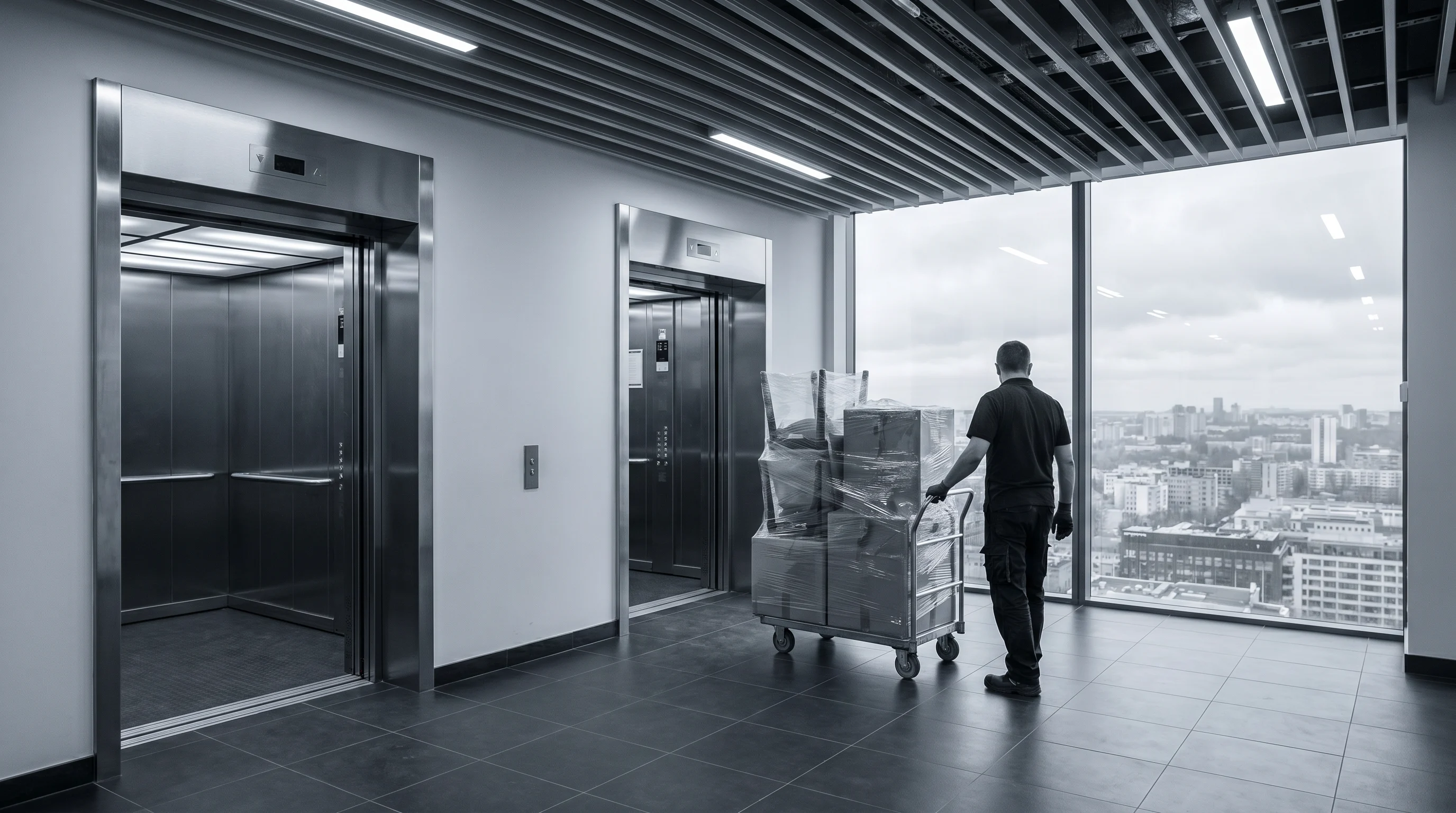
An inner-Melbourne tower move is a building-logistics exercise before it is a removals job. The booked goods-lift window, the building manager and the loading dock clearance set the clock. Everything else, including the truck, the crew and the route, is planned around those constraints.
If you are moving into or out of a tower in Southbank, Docklands, the CBD or the Forrest Hill precinct in South Yarra, start with the building manager, not the removalist.
There is no council removalist permit
The first thing most people search for when planning a city move is a one-day council parking permit. For a Melbourne CBD move, that search leads nowhere useful.
The City of Melbourne does not issue a one-day removalist or tradesperson street-parking bay. The relevant on-street permit the council does offer is a construction parking permit, which requires a minimum six-month term and is designed for building sites, not removal trucks.
The realistic loading plan is:
- A City of Melbourne loading zone for the street-side shuttle runs. Loading zones in the CBD default to a 30-minute limit for eligible commercial vehicles (goods or G-class vehicles with appropriate signage) that are actively loading, not parked. Many loading zones convert to two-hour general parking after 4pm.
- Your building’s own dock booking as the primary access route. This is where the real time is spent.
The 30-minute loading zone window is often enough to complete a shuttle run between the dock and the street, but it requires a crew that moves purposefully and a truck positioned to reload quickly.
Trams and clearways
Trams run on most of the CBD’s main arterials, and Melbourne’s clearway rules apply within 20 kilometres of the CBD. A clearway is a tow-zone during posted times, not just a fine risk. You cannot stop a removal truck on a clearway, and you cannot block tram tracks at peak.
Before move day, we confirm the clearway and tram-track status of every relevant street at both the origin and destination. A truck that gets towed from a clearway does not just cost the fine; it stops the move.
The building manager is the real authority
For apartments in Southbank, Docklands, the CBD core and South Yarra’s Forrest Hill towers, the building manager is the person who controls whether your move happens on the day you planned. The owners corporation, through the building manager, owns the goods-lift booking, the loading dock schedule and the after-hours access rules.
Here is what to confirm in writing, as early as possible:
Allowable move times. Most CBD buildings have approved windows, often weekday business hours or Saturday mornings. After-hours access, if it is available at all, usually involves a fee and requires separate approval.
Dock dimensions. Dock clearance height, entry ramp gradient and loading-bay length all matter. Inner-Melbourne loading docks commonly clear between 3.5 and 4.5 metres. That is below the roof height of a standard pantech or curtain-sider. We use a box truck matched to the dock, shuttle between truck and lift in stages if the volume requires it, and confirm the specific clearance for your building before we bring a vehicle that will not fit the ramp.
Lift internal dimensions and weight limit. The goods or freight lift is a separate lift from the passenger lifts. Know its internal height, width and depth, and its weight rating. Large wardrobes, mattresses and fridges need to be checked against the lift before the day, not discovered at the doors.
Booking lead time. Some buildings require five business days notice; others require two weeks. CBD towers during peak periods (school holidays, January, the end of financial year) fill their dock calendars quickly. A booking made the week before the move is a risk.
Certificate of currency and SWMS
Two documents come up in almost every CBD building enquiry:
A certificate of currency is a letter from the removalist’s insurer confirming active public liability cover, current as of the move date, often with the owners corporation named as an interested party. It is the building’s check that if the crew damages common property, someone’s insurance will cover it.
A Safe Work Method Statement (SWMS) describes how the work will be carried out safely, including the hazards identified and the controls in place. Some buildings require this from any commercial contractor working on site.
Both documents should be supplied to the building manager before move day, not handed over at the loading dock on the morning.
What good planning looks like on the day
When everything is confirmed in advance, a booked-window CBD tower move is one of the more predictable jobs we do. The dock is reserved, the goods lift is padded and locked to your floor for the slot, the certificate of currency is on file, the truck is sized to the dock, and the crew works from a plan rather than improvising at the gate.
The things that cause CBD moves to overrun or fail on the day are the things that should have been confirmed in advance: a truck that does not clear the dock ramp, a goods lift that building management booked to another resident over our window, or a building that requires a SWMS nobody knew to bring.
The Hoddle grid was surveyed in 1837 and has been building upward ever since. The bluestone laneways, the tram clearways and the owners corporation paperwork are real constraints, not formalities. Plan around them and the move is straightforward.
Plan the lift, then plan the move
Start by contacting your building manager. Get the dock dimensions, the lift booking and the allowed hours confirmed in writing. Then get a quote from a crew that knows how to work within those constraints.
Get a no-obligation quote for your inner-Melbourne move, or use the Lift and Dock Planner to work out your building’s access requirements before you call.
Common questions
Can I get a council removalist parking permit for a Melbourne CBD move?
No. The City of Melbourne does not issue a one-day removalist bay permit. Its on-street construction parking permit requires a minimum six-month term, so it is not useful for a move. The realistic plan is a City of Melbourne loading zone (30-minute default for commercial vehicles) combined with your building's own dock booking.
What documents does the building manager need before the move?
Most CBD and Southbank buildings require a certificate of currency showing current public liability insurance, sometimes with the owners corporation named as an interested party. Many also require a Safe Work Method Statement, a booked goods-lift slot and a move notice lodged at least five to seven business days in advance.
What truck sizes fit Melbourne CBD loading docks?
Loading dock clearance heights in inner-Melbourne buildings typically range from 3.5 to 4.5 metres, which is below the roof height of a standard pantech. We use a box truck matched to the dock clearance and shuttle in stages if the volume requires it.
How long does a typical CBD tower move take?
A two-bedroom apartment typically takes three to four hours on site, but the window the building manager allocates is often two to four hours. If you need more time, confirm a second slot in advance rather than overrunning the first one.
Planning a move?
Get a free, no-obligation quote and we'll plan the access at both ends with you.
Get a quote